
Pakistan’s Power Sector Circular
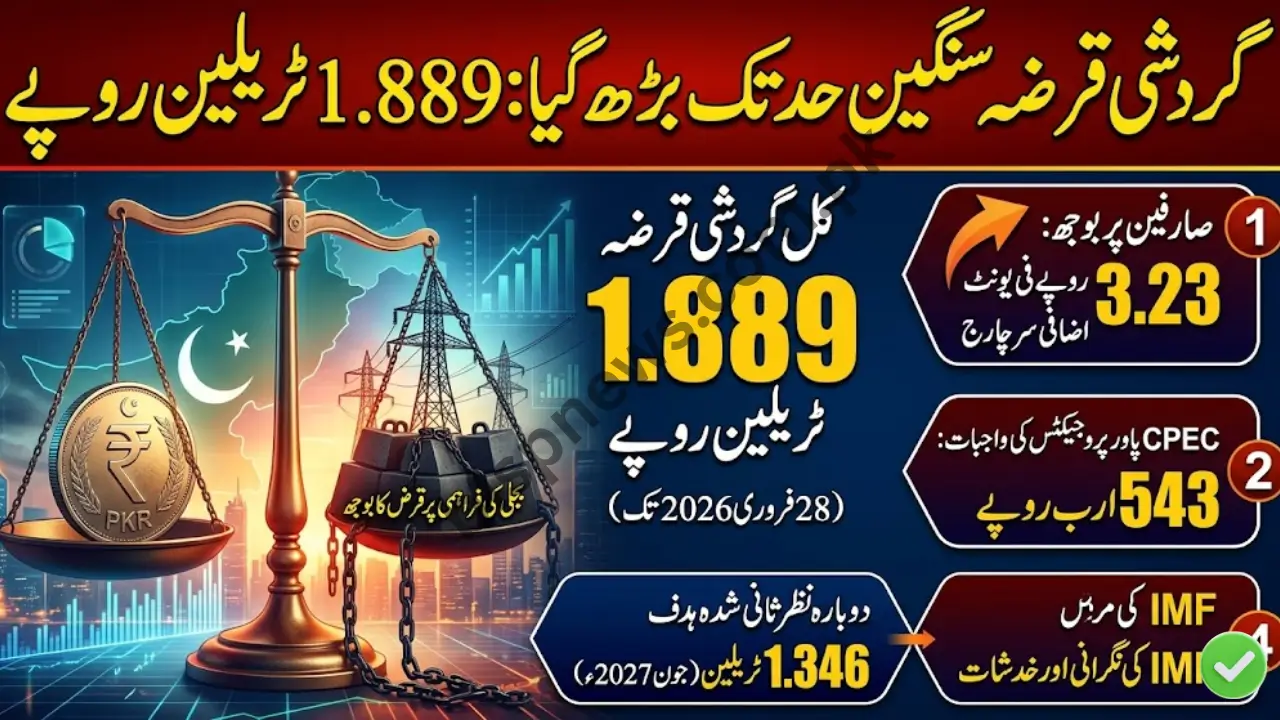
Pakistan’s energy sector is once again under financial stress as the circular debt in the power sector rises sharply, reaching Rs. 1.889 trillion as of 2026. This is a significant jump from Rs. 1.689 trillion recorded during the first half of the fiscal year 2026, highlighting ongoing challenges in the management of electricity finances.
Pakistan Government Launching Fuel Subsidy
A major factor behind this surge is the liabilities associated with China-Pakistan Economic Corridor (CPEC) power projects, which have reached an all-time high of Rs. 543 billion. Analysts warn that the rapid accumulation of circular debt threatens the stability of the national energy sector and raises concerns about the sustainability of future power supply.
- Circular debt at Rs. 1.889 trillion as of Feb 28, 2026
- Rs. 543 billion linked to CPEC power projects
- Nearly Rs. 200 billion increase in two months
Free SMS Service for BISP 8171 Ehsas Programme
Reasons Behind the Rising Circular Debt
The sharp rise in debt has been attributed to lower-than-expected recoveries from consumers and higher system losses compared to targets set by the National Electric Power Regulatory Authority (NEPRA). These operational inefficiencies are fueling financial pressure and have drawn scrutiny from the International Monetary Fund (IMF), which continues to monitor Pakistan’s energy sector reforms closely.
The government had previously aimed to reduce circular debt to Rs. 1.614 trillion by the end of the current fiscal year. However, due to rising liabilities, the medium-term target has now been revised to Rs. 1.346 trillion by June 2027. This upward revision reflects the growing challenge of balancing revenue collection and sector sustainability.
- Low recoveries and higher system losses contributing to debt
- IMF concerned about economic impact
- Medium-term target revised to Rs. 1.346 trillion by June 2027
Government Measures to Contain Circular Debt
To address the escalating debt, the government approved a Rs. 200 billion technical supplementary grant as equity support for distribution companies. This measure is aimed at shoring up the finances of power distribution companies and ensuring the continuity of electricity supply across the country.
Meanwhile, consumers continue to pay a debt service surcharge of Rs. 3.23 per unit, which is intended to help cover the cost of servicing the circular debt. Policymakers remain concerned about the long-term implications of this debt for electricity tariffs, fiscal stability, and Pakistan’s negotiations with the IMF on energy sector reforms.
- Rs. 200 billion supplementary grant for distribution companies
- Consumers bear Rs. 3.23 per unit surcharge
- Ongoing policy focus on debt reduction and sector reform
Table: Circular Debt Overview
| Indicator | Amount (Rs.) |
|---|---|
| Total Circular Debt (Feb 28, 2026) | 1.889 trillion |
| CPEC Power Project Liabilities | 543 billion |
| Previous Half-Year Debt | 1.689 trillion |
| Consumer Debt Service Surcharge | 3.23 per unit |
Policy and IMF Implications
The rising circular debt remains a central concern in Pakistan’s economic planning and energy sector policy. The issue is expected to be discussed at NEPRA’s public hearing on fuel charges adjustment for February 2026, which will determine how much of the cost is passed on to consumers.
As Pakistan engages with the IMF on energy reforms, managing circular debt is critical to securing financial assistance and stabilizing the sector. Analysts argue that long-term solutions will require stricter revenue collection, improved operational efficiency, and sustainable energy pricing policies.
- NEPRA public hearing to review fuel charges
- IMF engagement on sector reforms
- Long-term focus on efficiency and sustainable pricing
Apni Chhat Apna Ghar Scheme 2026 – Affordable
FAQs
What is Pakistan’s current power sector circular debt?
As of February 28, 2026, Pakistan’s circular debt in the energy sector stands at Rs. 1.889 trillion.
Why has circular debt increased recently?
The rise is due to lower recoveries from consumers, higher system losses, and growing liabilities linked to CPEC power projects.
What steps has the government taken to address the debt?
The government approved a Rs. 200 billion grant for distribution companies, while consumers pay a surcharge of Rs. 3.23 per unit.
How does circular debt impact electricity consumers?
It increases electricity costs, as part of the debt is recovered through consumer surcharges, affecting household and business expenses.
When is circular debt expected to reduce?
Medium-term targets aim to lower circular debt to Rs. 1.346 trillion by June 2027, though progress depends on reforms and improved sector efficiency.