
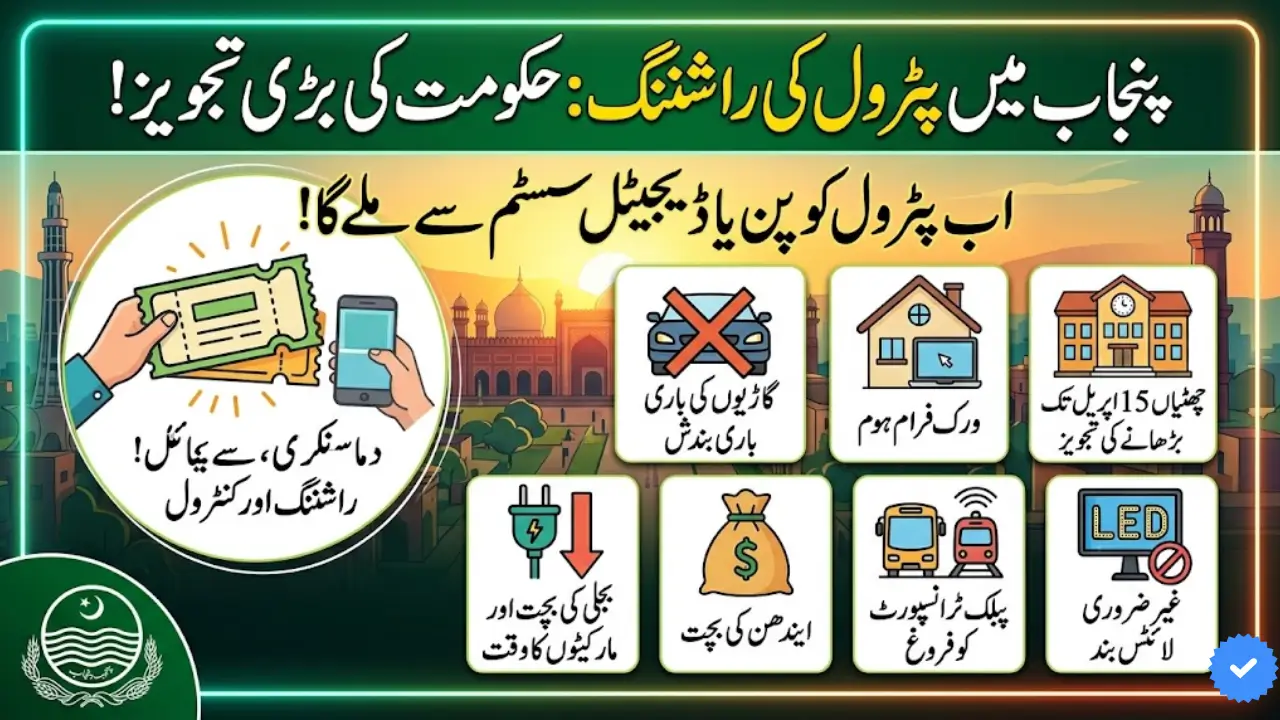
Punjab Government Plans Fuel Rationing
The Government of Punjab is preparing a comprehensive strategy to tackle the ongoing energy crisis by introducing strict fuel management and conservation policies. One of the key proposals includes a coupon-based or digital system for distributing petrol and diesel, ensuring controlled usage and preventing shortages. This move aims to stabilize fuel availability while reducing unnecessary consumption across the province.
Punjab Government Considers Work-from-Home

Officials have submitted these recommendations to Maryam Nawaz for approval. The plan reflects a proactive approach to managing limited energy resources and minimizing the impact of the crisis on daily life. By implementing structured distribution and conservation methods, the government hopes to maintain balance in supply and demand.
- Introduction of digital or coupon-based fuel distribution
- Limiting fuel supply to specific vehicles on certain days
- Focus on reducing overall fuel consumption
Fuel Distribution System and Vehicle Restrictions
A major highlight of the proposal is the controlled distribution of fuel through a digital or coupon-based system. This method ensures that petrol and diesel are distributed fairly among users while preventing hoarding and misuse. It also allows authorities to monitor fuel usage more effectively.
In addition, the plan suggests restricting fuel availability based on vehicle schedules. This means certain vehicles may only be allowed to refuel on designated days, which can significantly reduce traffic congestion and fuel demand. Such systems have been used in other regions during crises to manage limited resources efficiently.
- Scheduled fuel access for vehicles
- Monitoring and tracking fuel consumption
- Prevention of panic buying and shortages
Maryam Ko Batayen Portal 2026 Apply Online for Rs.
| Measure | Purpose |
|---|---|
| Digital Coupons | Controlled fuel distribution |
| Vehicle Scheduling | Reduced daily fuel demand |
| Monitoring System | Prevent misuse and hoarding |
Education Sector Adjustments to Save Energy
The government is also focusing on reducing energy usage in educational institutions. One of the key recommendations is extending holidays for schools and colleges until mid-April. This step is expected to lower electricity consumption in large campuses.
Additionally, a hybrid learning system may be introduced, allowing students to attend classes both online and in person. This approach ensures continuity in education while reducing the need for full-time physical operations in schools and colleges.
- Extension of holidays until April 15
- Adoption of hybrid learning systems
- Reduced electricity usage in institutions
Work-from-Home and Public Activity Restrictions
To further conserve energy, strict work-from-home policies are being considered for private offices. By reducing the number of people commuting daily, fuel consumption can be significantly lowered. This step also decreases pressure on transportation systems and energy resources.
The proposal also includes banning non-essential events such as large gatherings and celebrations. Limiting such activities can help reduce electricity usage and fuel demand, contributing to overall energy conservation efforts across Punjab.
- Work-from-home directives for private sector
- Ban on non-essential events and gatherings
- Reduced commuting and energy usage
Expansion of Public Transport and Reduced Private Vehicle Use
Another important part of the plan is strengthening public transportation systems. Expanding metro and bus services can encourage people to shift from private vehicles to public transport, which is more energy-efficient.
By improving accessibility and reliability of public transport, the government aims to reduce the number of cars and motorcycles on the roads. This will not only save fuel but also help in reducing traffic congestion and environmental pollution.
- Expansion of metro and bus networks
- Encouraging use of public transport
- Reduction in private vehicle dependency
| Transport Type | Expected Benefit |
|---|---|
| Metro Services | Efficient mass transit |
| Bus Networks | Reduced fuel consumption |
| Public Transport | Lower traffic congestion |
Additional Energy-Saving Measures Under Consideration
The government is also exploring several additional steps to cut down energy usage. These include switching off LED billboards and decorative lighting, especially during late hours, to conserve electricity.
Streetlights may operate on alternate modes after 10 PM, and market operating hours could be reduced. These measures are designed to minimize unnecessary energy consumption while maintaining essential services for the public.
- Turning off decorative lighting and billboards
- Limited streetlight operation after 10 PM
- Reduced market hours
Final Decision and Implementation Timeline
Currently, all proposed measures are under review and will be finalized after consultations at the provincial level. Authorities are carefully evaluating each recommendation to ensure that the policies are practical and effective.
Once approved, these measures are expected to be implemented in phases. The government aims to strike a balance between managing the energy crisis and minimizing inconvenience for the public.
- Ongoing consultations before final approval
- Gradual implementation of policies
- Focus on public convenience and sustainability
BISP 8171 Survey 2026 Complete Eligibility
FAQs
What is the purpose of the fuel coupon system?
It is designed to control fuel distribution and prevent shortages during the energy crisis.
Will all vehicles be affected by fuel restrictions?
Yes, fuel access may be limited based on specific schedules for different vehicles.
Are schools closing due to the energy crisis?
Yes, there is a proposal to extend holidays and introduce hybrid learning systems.
Will offices switch to work-from-home permanently?
No, it is a temporary measure to reduce energy consumption during the crisis.
When will these measures be implemented?
The final decision is pending, and implementation will begin after official approval.