
Pakistan Nears New IMF Funding
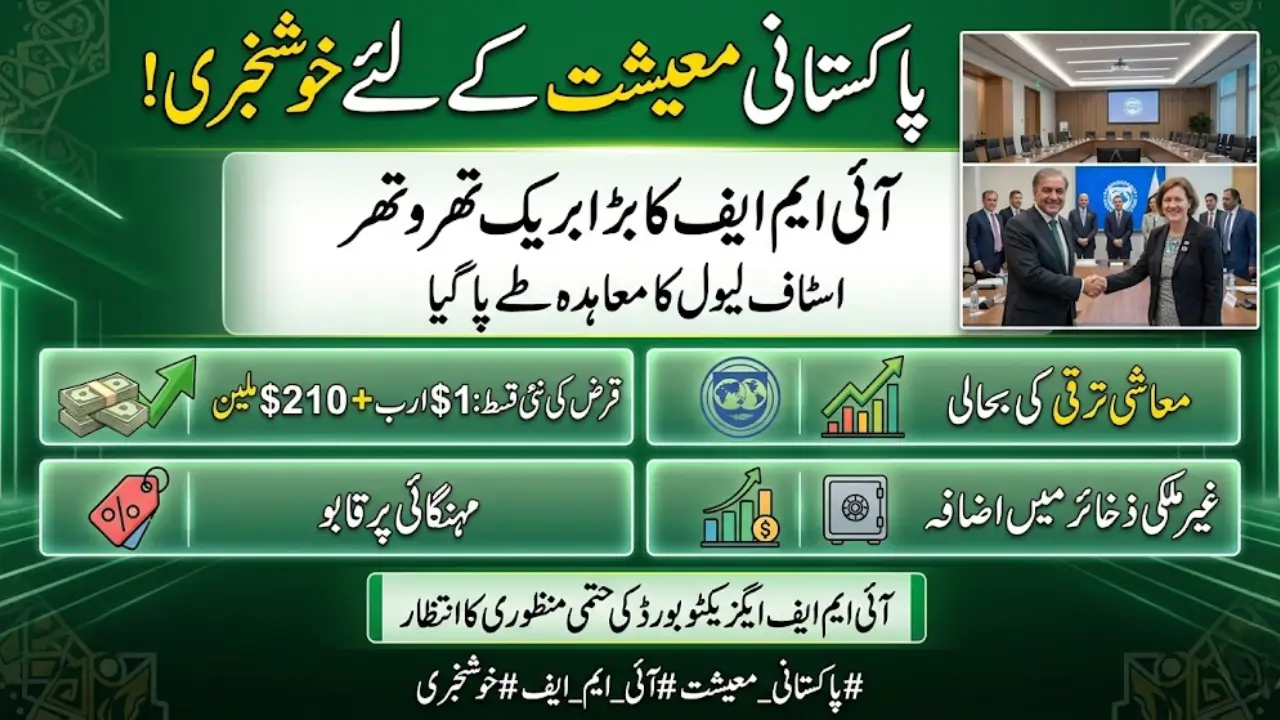
Pakistan has moved a step closer to securing fresh financial support after reaching a staff-level agreement with the International Monetary Fund. This agreement covers the third review of the Extended Fund Facility and the second review under the Resilience and Sustainability Facility, signaling continued international confidence in the country’s reform efforts. However, the final approval still depends on the IMF Executive Board.
BISP 8171 Payment Card Launched Easier
Once approved, Pakistan is expected to receive around $1 billion under the EFF and approximately $210 million through the RSF. This will increase total disbursements under these programs to nearly $4.5 billion, providing crucial support for economic stability and reform implementation.
- Staff-level agreement reached with IMF
- Final approval pending from IMF Executive Board
- Expected funding includes $1 billion (EFF) and $210 million (RSF)
- Total program disbursement to reach about $4.5 billion
Economic Progress and Stability Indicators Improve
The IMF has acknowledged that Pakistan’s economic reform program remains broadly on track, with visible improvements across key sectors. Progress has been made in controlling inflation, managing fiscal deficits, and stabilizing the external account, which has helped strengthen overall economic performance.
Economic activity has shown recovery after fiscal year 2025, while inflation has remained relatively controlled. The current account balance and foreign reserves have also improved, although external risks such as global geopolitical tensions and fluctuating energy prices continue to pose challenges.
- Inflation levels have stabilized
- Economic growth has gradually recovered
- External account position has improved
- Global risks still affect economic outlook
PTA Plans Separate 5G Spectrum Auction for Azad
Government’s Fiscal and Tax Reform Commitments
The government has committed to maintaining strict fiscal discipline to ensure long-term stability. It aims to achieve a primary budget surplus of 1.6% of GDP in FY2026 and further increase it to 2% in FY2027. These targets reflect a strong commitment to responsible financial management.
Efforts are also being made to strengthen revenue collection through reforms led by the Federal Board of Revenue. These include improving tax compliance, expanding digital systems, and enhancing transparency to ensure sustainable revenue growth.
- Target of 1.6% primary surplus in FY2026
- Plan to increase surplus to 2% in FY2027
- Focus on expanding tax base
- Introduction of digital invoicing and stronger audits
Social Protection and Public Welfare Expansion
Alongside economic reforms, the government is prioritizing social protection to support vulnerable populations. Programs like the Benazir Income Support Programme are being expanded, with increased payments adjusted for inflation.
The aim is to reduce the impact of rising living costs on low-income households. Increased spending on health and education is also part of the broader strategy to ensure inclusive and sustainable growth across the country.
- Expansion of BISP coverage
- Inflation-adjusted financial assistance
- Increased investment in health and education
- Focus on protecting low-income families
Monetary Policy and Exchange Rate Strategy
The State Bank of Pakistan is expected to continue a cautious and data-driven monetary policy approach. Maintaining a tight policy stance will help keep inflation within target ranges and stabilize the economy.
Exchange rate flexibility remains a key policy tool, allowing the economy to absorb external shocks. This approach is particularly important in managing the effects of global commodity price fluctuations and financial uncertainties.
- Tight monetary policy to control inflation
- Data-driven decision-making approach
- Flexible exchange rate policy maintained
- Protection against external economic shocks
Government Petrol Subsidy 2026 New App Based
Energy Sector and Structural Reforms
Energy sector reforms are a major focus of the agreement, as Pakistan aims to reduce circular debt and improve efficiency. Measures include timely tariff adjustments, reducing subsidies, and improving the performance of power companies.
Structural reforms are also underway to improve governance and encourage private sector growth. These include privatization of state-owned enterprises and strengthening anti-corruption frameworks to build investor confidence.
- Steps to control circular debt
- Reduction in energy subsidies
- Privatization of inefficient entities
- Improved governance and transparency
Climate and Sustainability Initiatives Under RSF
Under the RSF program, Pakistan is advancing climate-related reforms to build long-term resilience. These initiatives focus on sustainable development and reducing the impact of climate change on the economy.
Efforts include promoting green transport, improving water management systems, and developing disaster risk financing frameworks. These steps are essential for ensuring environmental sustainability alongside economic growth.
- Promotion of green transport solutions
- Strengthening water resource management
- Development of disaster risk financing systems
- Focus on climate resilience and sustainability
ECC Approves Rs. 100 Billion Grant to Control
FAQs
What is the IMF agreement about?
It is a staff-level agreement allowing Pakistan to receive new financial support under ongoing reform programs. Final approval is required from the IMF Executive Board.
How much funding will Pakistan receive?
Pakistan is expected to receive about $1 billion under EFF and $210 million under RSF. Total funding will reach around $4.5 billion.
What reforms has Pakistan agreed to implement?
The country will continue fiscal discipline, tax reforms, energy sector improvements, and governance changes. These aim to stabilize and grow the economy.
How will this benefit the public?
The agreement supports economic stability and expands social programs like BISP. It also helps control inflation and improve public services.
When will the funds be released?
Funds will be released after approval by the IMF Executive Board. This will mark the next phase of Pakistan’s economic program.