
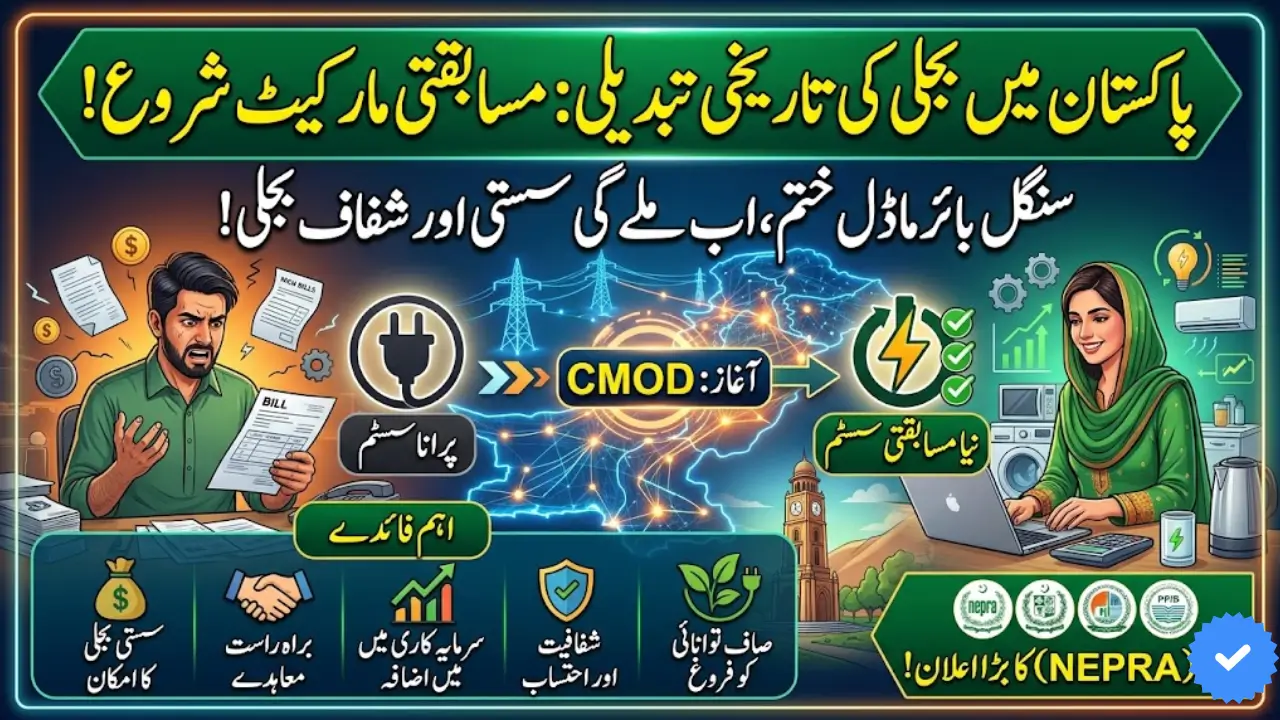
Pakistan Moves Toward Competitive Power
The National Electric Power Regulatory Authority has officially declared the Competitive Market Operations Date CMOD marking a major turning point in the country’s power sector reforms. This step signals Pakistan’s transition from a traditional electricity system to a more modern, competitive, and transparent market structure. The move is expected to improve efficiency and accountability across the energy sector.
Punjab Wheat Support Program Pay Order 2026
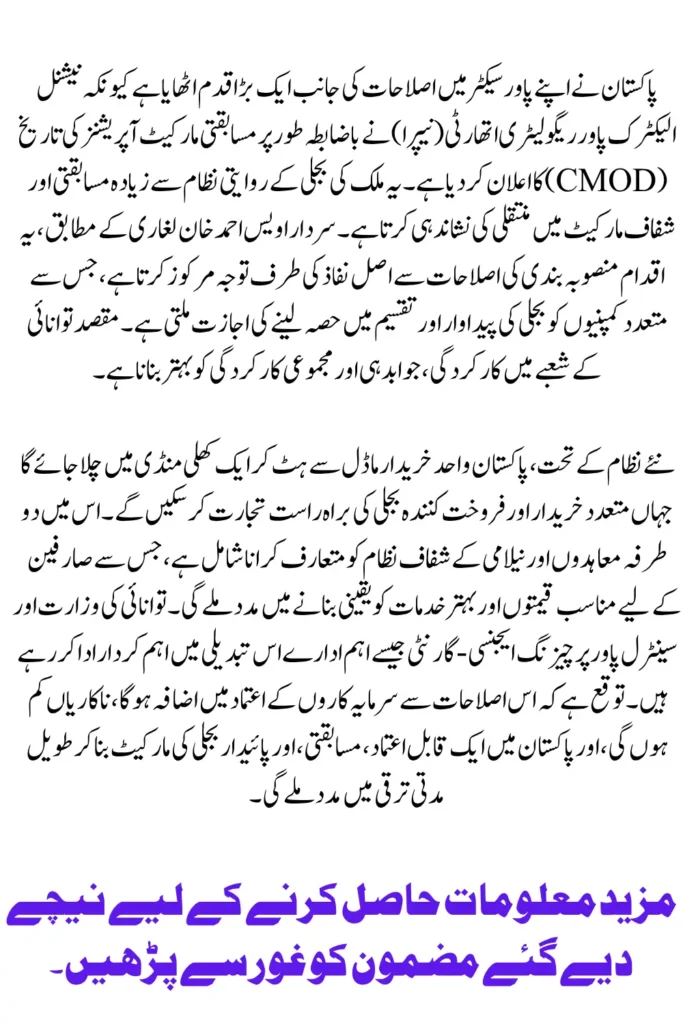
According to Sardar Awais Ahmed Khan Leghari, this development represents a shift from planning reforms to actively implementing them. The new system is designed to create fair competition, allowing multiple players to participate in electricity generation and distribution without discrimination.
- CMOD marks the start of a competitive electricity market
- Transition from a single-buyer to a multi-player system
- Focus on transparency and efficiency
From Single-Buyer Model to Open Market System
Previously, Pakistan operated under a single-buyer model where one central entity handled electricity purchasing and distribution. This system often led to inefficiencies, limited competition, and financial challenges within the power sector. The new framework aims to address these issues by introducing a market-based approach.
Under the competitive model, multiple buyers and sellers can interact directly, improving pricing mechanisms and service quality. Open access to the transmission network will ensure that all participants have equal opportunities, encouraging innovation and better performance across the industry.
- End of single-buyer dominance
- Open access to transmission networks
- Equal participation for all stakeholders
BISP 8171 CNIC Check Portal Down 2026? Use These
| Feature | Old System | New Market System |
|---|---|---|
| Structure | Single buyer | Competitive market |
| Access | محدود (restricted) | Open access |
| Transparency | Low | High |
Bilateral Contracts and Competitive Auctions
As part of the reform process, the government has approved the transfer of 800 megawatts of electricity demand to bilateral contracts. These agreements will allow buyers and sellers to negotiate directly, creating a more flexible and efficient electricity market.
The contracts will be executed through transparent and automated auctions over time. This approach ensures fair pricing and reduces the risk of favoritism or inefficiency, ultimately benefiting both consumers and investors in the long run.
- 800 MW demand shifted to bilateral contracts
- Transparent and automated auction system
- Improved pricing and flexibility
Role of Key Institutions in Power Sector Reform
The success of this initiative is the result of coordinated efforts by multiple institutions. Key organizations such as the Ministry of Energy, Independent System and Market Operator, and Central Power Purchasing Agency-Guaranteed have played a crucial role in designing and implementing the new framework.
Other stakeholders, including the Private Power and Infrastructure Board and distribution companies, have also contributed to ensuring a smooth transition. Their collaboration highlights a unified effort to modernize Pakistan’s energy sector.
- Strong institutional coordination
- Involvement of regulatory and operational bodies
- Unified approach to reform implementation
Impact on Investors and Energy Sector Growth
The introduction of a competitive electricity market is expected to boost investor confidence significantly. By ensuring transparency and fair competition, the new system creates a more attractive environment for both local and international investors.
In addition, the reforms aim to improve financial sustainability within the power sector. With better governance and efficient operations, the system can reduce losses and support long-term growth, benefiting the overall economy.
- Increased investor confidence
- Improved financial sustainability
- Better governance in energy sector
| Benefit | Expected Outcome |
|---|---|
| Transparency | Fair competition |
| Efficiency | Lower system losses |
| Investment | Increased funding opportunities |
Future Vision: A Reliable and Sustainable Power Market
Looking ahead, the government is focused on building a reliable and future-ready electricity market. The new system is designed to support innovation and encourage the adoption of clean energy solutions, aligning with global trends in sustainable development.
This transformation will also contribute to long-term economic growth by ensuring stable and affordable electricity supply. The focus remains on creating a system that is efficient, transparent, and capable of meeting future energy demands.
- دعم clean energy adoption
- Long-term economic growth
- Reliable and efficient electricity supply
52 Funded Master’s Scholarships in UK for Pakistani
FAQs
What is CMOD in Pakistan’s power sector?
CMOD stands for Competitive Market Operations Date, marking the start of a competitive electricity market.
What changes will consumers see?
Consumers may benefit from better pricing, improved service quality, and reliable electricity supply.
What are bilateral contracts in this system?
They are direct agreements between electricity buyers and sellers for flexible energy trading.
How will this impact investors?
The new system increases transparency and creates more opportunities for investment.
Which organizations are involved in the reform?
Key bodies include NEPRA, Ministry of Energy, ISMO, CPPA-G, and PPIB.