
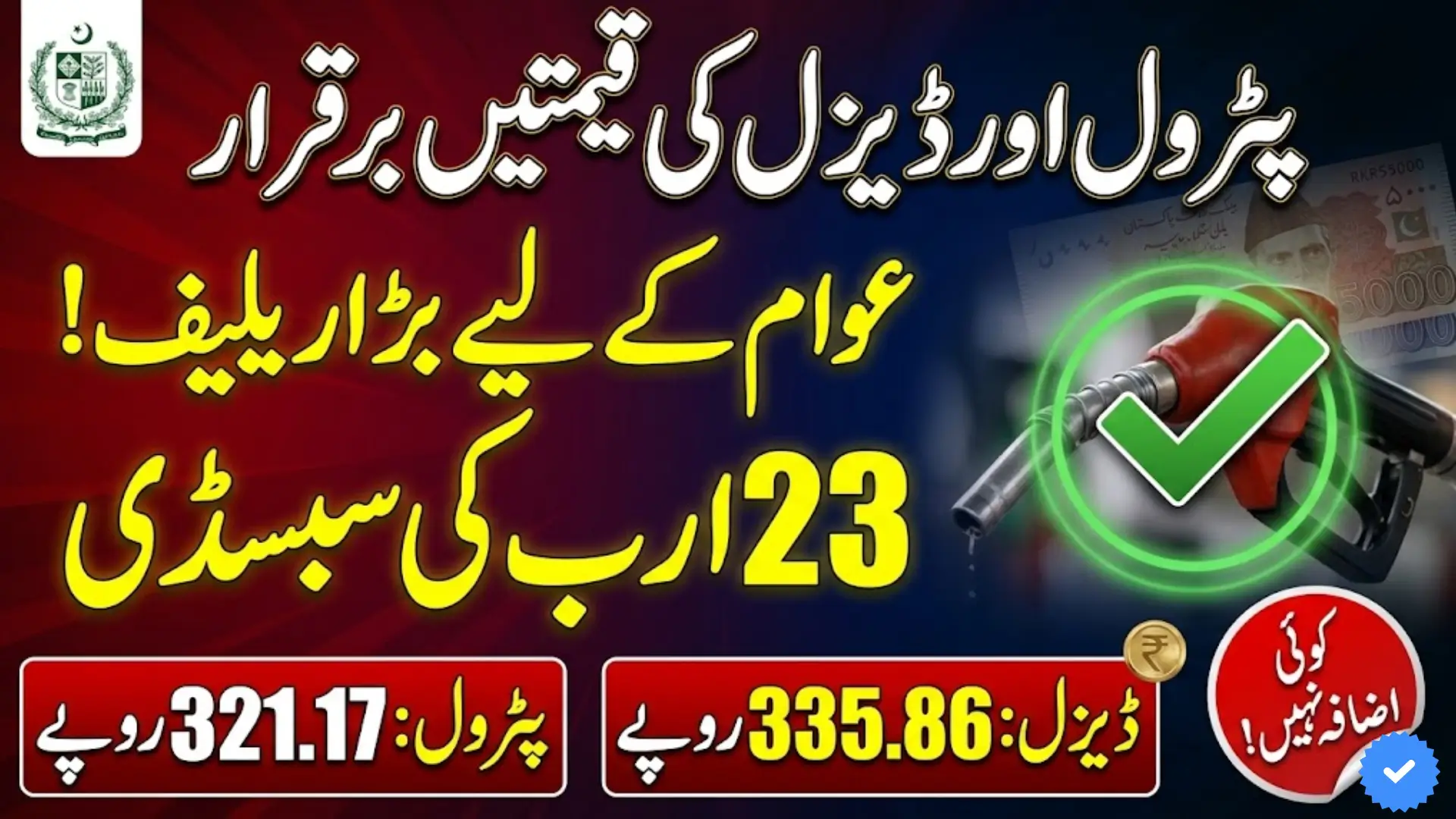
Government Maintains Petrol and Diesel Prices
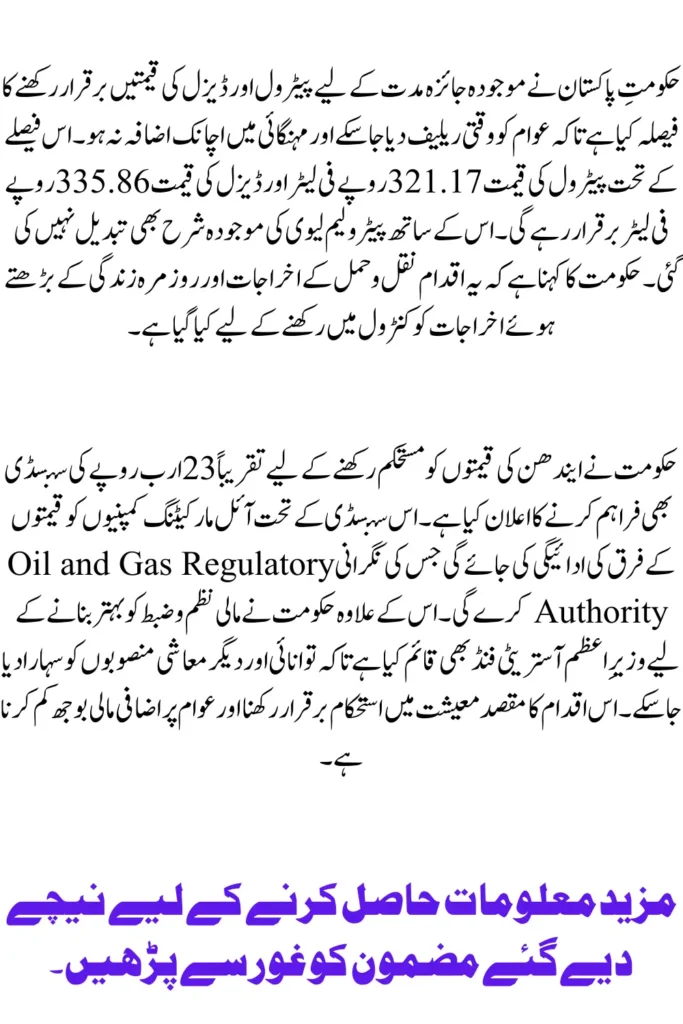
The federal government has decided to keep fuel prices unchanged for the current review period while maintaining the existing petroleum levy on petrol and diesel. This decision aims to provide temporary relief to consumers and prevent sudden increases in transportation and living costs. According to official announcements, the current prices will remain in effect until the next petroleum price review.
BISP 8171 Ehsaas Program 2026 Eligibility, Registration, Payment Increase to Rs 14,500 & How
Fuel prices play an important role in Pakistan’s economy because they directly affect transportation, production, and daily household expenses. By keeping prices stable for the time being, the government intends to reduce inflationary pressure and maintain market stability during the ongoing review period.
Key points regarding the decision include:
- Petrol and diesel prices will remain unchanged temporarily
- Petroleum levy rates will stay at existing levels
- The decision applies until the next fuel price review
- The government plans financial support to maintain stability
Current Petrol and Diesel Prices in Pakistan
The latest government notification confirms that petrol and diesel prices will remain the same for the current pricing cycle. These prices are determined through a structured review process that considers international oil prices, currency exchange rates, and domestic tax policies.
Petrol is currently priced at Rs. 321.17 per litre, while diesel is available at Rs. 335.86 per litre. These rates are expected to remain effective until the next official review period unless significant changes occur in global oil markets.
| Fuel Type | Price per Litre | Petroleum Levy |
|---|---|---|
| Petrol | Rs. 321.17 | Rs. 105.37 |
| Diesel | Rs. 335.86 | Rs. 55.24 |
Important highlights of the current fuel pricing include:
- Petrol price is Rs. 321.17 per litre
- Diesel price is Rs. 335.86 per litre
- Petroleum levy remains unchanged
- Prices will be reviewed in the next pricing cycle
Petroleum Levy Structure on Fuel
The petroleum levy is a key component of the fuel pricing structure in Pakistan. It is a government-imposed charge that contributes to national revenue and helps fund various economic programs. In the latest decision, the government has chosen not to change the levy on petrol or diesel.
Keeping the levy unchanged helps maintain stability in fuel pricing while avoiding sudden financial adjustments in the energy sector. This measure also allows authorities to manage budget planning without significantly altering the existing taxation structure.
Current petroleum levy rates include:
- Rs. 105.37 per litre on petrol
- Rs. 55.24 per litre on diesel
- No change in levy rates during this review period
- Levies contribute to government revenue collection
Government Subsidy to Maintain Fuel Prices
To keep fuel prices stable during the review period from March 14 to March 20, the government has announced a subsidy package. This subsidy will help offset price fluctuations and ensure that consumers do not face sudden increases in petrol and diesel costs.
The total subsidy allocated for this purpose is estimated at Rs. 23 billion. This financial support will compensate oil marketing companies for the difference between the actual cost of fuel and the retail price charged to consumers.
Subsidy details include:
- Total subsidy amount: Rs. 23 billion
- Petrol subsidy: Rs. 49.63 per litre
- Diesel subsidy: Rs. 75.05 per litre
- Subsidy applicable for March 14 to March 20
These subsidies are intended to temporarily balance market conditions while protecting consumers from immediate price increases.
Latest Gold Price in Pakistan Today 24K, 22K Gold Rate Update 16 March 2026
Price Differential Claims Mechanism
The subsidy provided by the government will be distributed through a system known as price differential claims. Under this mechanism, oil marketing companies will be reimbursed for the financial difference created by maintaining lower fuel prices.
The Oil and Gas Regulatory Authority will play a central role in this process by reviewing and verifying the claims submitted by oil companies. Only after proper auditing and verification will the payments be released to ensure transparency and accountability.
Key steps in the process include:
- Oil companies submit billing claims for subsidy
- OGRA verifies and audits submitted claims
- Payments are approved after verification
- Funds are transferred to companies accordingly
This structured approach ensures that subsidies are distributed fairly and according to official financial procedures.
Creation of the Prime Minister’s Austerity Fund
In addition to maintaining fuel prices, the government has approved the establishment of a Prime Minister’s Austerity Fund. This fund is designed to support financial management and allocate resources for important economic initiatives.
The Economic Coordination Committee has approved the transfer of Rs. 27.1 billion into the new fund. A significant portion of this amount will be used to finance the fuel subsidy program aimed at stabilizing petrol and diesel prices.
| Fund Allocation | Amount |
|---|---|
| Total Austerity Fund Allocation | Rs. 27.1 Billion |
| Fuel Subsidy Transfer to OGRA | Rs. 23 Billion |
| Remaining Funds | For other economic support programs |
Key objectives of the fund include:
- Supporting government financial stability
- Managing subsidy payments for fuel prices
- Funding important economic initiatives
- Improving budget allocation efficiency
9999 Online Check 13000 Ramzan Relief Package
Role of OGRA in Implementing the Policy
The Oil and Gas Regulatory Authority is responsible for overseeing the implementation of the subsidy and price stabilization mechanism. The authority ensures that fuel pricing policies are applied correctly and that financial claims are processed transparently.
According to the ministry, the Director General of Oil has formally communicated with OGRA regarding the implementation of the price differential payment mechanism. This coordination ensures that the subsidy process runs smoothly and according to regulatory requirements.
Responsibilities of OGRA in this process include:
- Verifying subsidy claims submitted by companies
- Conducting financial audits before payment
- Ensuring compliance with government policies
- Managing the disbursement of approved funds
Through this role, OGRA helps maintain transparency and accountability in the fuel pricing system.
Conclusion
The government’s decision to keep petrol and diesel prices unchanged reflects an effort to maintain economic stability and protect consumers from sudden fuel price increases. By maintaining the existing petroleum levy and introducing a subsidy package, authorities aim to manage market conditions while minimizing financial pressure on the public.
With the support of the Oil and Gas Regulatory Authority and the newly established Prime Minister’s Austerity Fund, the government plans to implement this policy efficiently. The approach highlights the importance of careful financial planning and regulatory oversight in managing Pakistan’s fuel pricing system.
8558 KPK Ramzan Package 2026 Complete Guide
FAQs
What is the current petrol price in Pakistan?
The current petrol price is Rs. 321.17 per litre. This rate will remain effective until the next official fuel price review.
What is the diesel price in Pakistan right now?
Diesel is currently priced at Rs. 335.86 per litre. The government has decided to keep the price unchanged for the current period.
What is the petroleum levy on petrol?
The petroleum levy on petrol is Rs. 105.37 per litre. This levy remains unchanged under the latest government decision.
How much subsidy is the government providing for fuel?
The government has announced a subsidy of Rs. 23 billion to keep petrol and diesel prices stable during the current review period.
What is the role of OGRA in fuel pricing?
OGRA verifies subsidy claims from oil marketing companies and ensures that fuel pricing policies are implemented correctly.