
Federal Government Plans
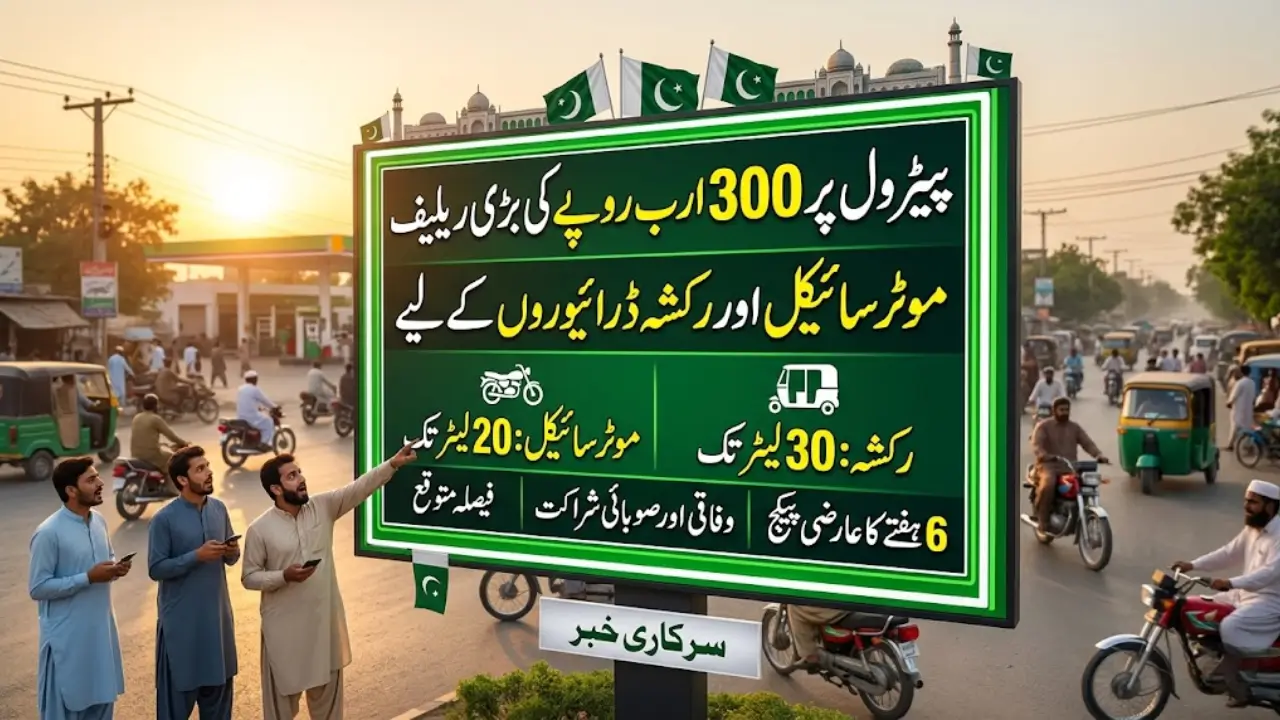
Pakistan’s federal government is preparing a major relief initiative to reduce the burden of rising fuel prices on low-income citizens. According to Finance Division sources, the government has approached provincial authorities to contribute financially toward a Rs. 300 billion subsidy program that will run for approximately six weeks. This step comes as global oil prices continue to increase, directly impacting transportation costs and daily living expenses.
BISP New Payment 2026 Check Latest Update and Payment Status
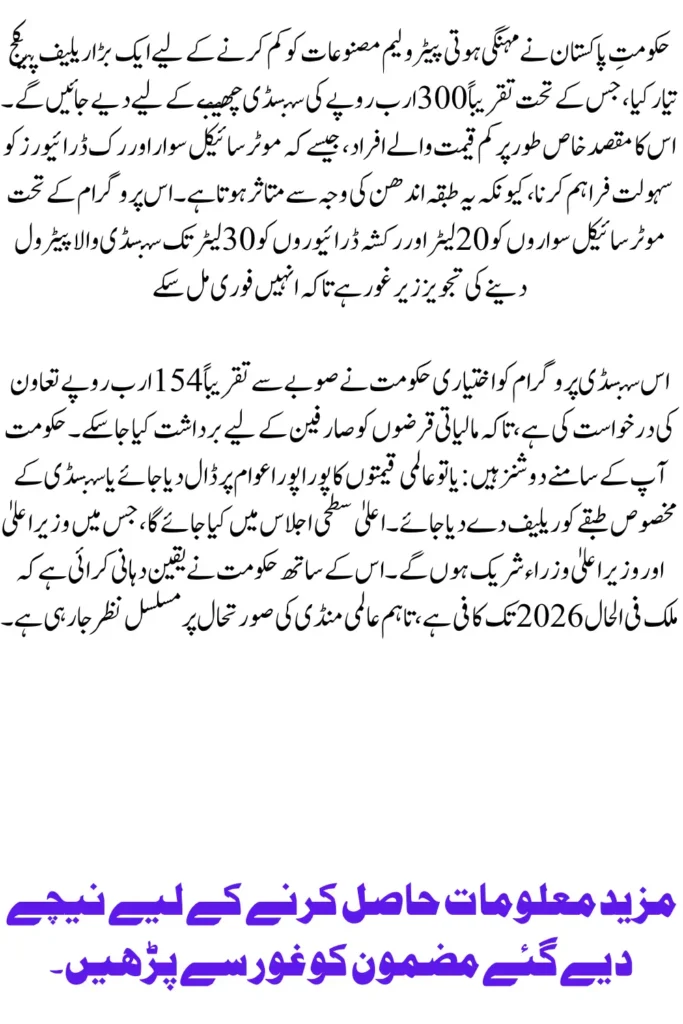
The main goal of this subsidy is to support individuals who rely heavily on affordable transport, especially motorcyclists and rickshaw drivers. These groups form a large portion of Pakistan’s working population and are highly sensitive to fuel price changes. By targeting them first, the government aims to provide immediate and focused relief where it is most needed.
- Total proposed subsidy: Rs. 300 billion
- Duration of program: 6 weeks
- Provincial contribution requested: Rs. 154 billion
- Focus groups: motorcyclists and rickshaw drivers
Provinces Asked to Share Financial Responsibility
To make the subsidy program feasible, the federal government has formally requested provinces to allocate around Rs. 154 billion. This shared financial model is designed to distribute the economic burden across all levels of government rather than placing it solely on federal resources. Such coordination is crucial given Pakistan’s current fiscal constraints and ongoing economic challenges.
Provincial participation will play a key role in determining how effectively and quickly the subsidy can be implemented. Discussions are ongoing, and each province is expected to review its budget capacity before committing funds. The final structure of contributions may vary depending on negotiations and available financial space.
- Federal government seeking joint funding approach
- Provinces expected to review budget allocations
- Shared responsibility to reduce fiscal pressure
- Coordination required for smooth implementation
BISP Registration Process 2026 Step-by-Step Guide to Apply Online
Two Key Options Under Consideration
Government officials have outlined two main strategies to deal with rising fuel costs. The first option is to pass the full increase in international oil prices directly to consumers. While this approach maintains fiscal discipline, it can significantly increase the financial burden on the public, especially low-income households.
The second option is to introduce a targeted subsidy system. Under this plan, motorcyclists may receive up to 20 litres of subsidized fuel, while rickshaw drivers could get up to 30 litres. This method focuses on controlled relief, ensuring that subsidies are limited to essential users rather than benefiting all consumers equally.
- Option 1: Full price pass-through to consumers
- Option 2: Targeted fuel subsidy quotas
- Motorcycles: up to 20 litres subsidized
- Rickshaws: up to 30 litres subsidized
Estimated Cost and Program Scope
The total estimated cost of the proposed subsidy is around Rs. 300 billion for a short duration of six weeks. This highlights the scale of financial commitment required to stabilize fuel prices even temporarily. The government is carefully evaluating whether such a large expenditure is sustainable given existing economic pressures.
Despite the high cost, the program is being considered as a short-term relief measure rather than a permanent solution. Authorities believe that targeted subsidies can help manage inflation impacts while broader economic policies are developed to address long-term energy challenges.
| Category | Details |
|---|---|
| Total Cost | Rs. 300 billion |
| Duration | 6 weeks |
| Target Users | Motorcyclists, Rickshaws |
| Subsidy Type | Limited fuel quota |
High-Level Decision Expected Soon
A final decision regarding the subsidy program is expected after a high-level meeting involving top leadership, including the President, Prime Minister, and Provincial Chief Ministers. This meeting will determine whether the subsidy is approved and how it will be implemented across the country.
Such decisions require careful balancing between public relief and fiscal responsibility. Policymakers must ensure that any subsidy plan does not further strain the national budget while still providing meaningful support to citizens.
- Meeting expected next week
- Participation of federal and provincial leadership
- Final approval pending policy consensus
- Focus on balancing relief and budget stability
Fuel Reserves Status and Supply Outlook
Government data indicates that Pakistan currently has sufficient fuel reserves to meet domestic demand until May 10, 2026. This provides some stability in terms of supply, ensuring that any subsidy program can be implemented without immediate concerns about shortages.
However, maintaining adequate reserves remains a priority, especially as global energy markets remain volatile. Authorities continue to monitor supply chains and international trends to avoid disruptions in the future.
BISP 8171 SMS Service 2026 Ultimate Guide to Check Payment & Eligibility Fast
| Aspect | Status |
|---|---|
| Fuel Availability | Sufficient |
| Coverage Period | Until May 10, 2026 |
| Risk Level | Moderate due to global prices |
| Monitoring | Ongoing by authorities |
FAQs
What is the purpose of the fuel subsidy program?
The program aims to reduce the financial burden of rising fuel prices on low-income groups, especially motorcyclists and rickshaw drivers.
How much subsidy is being proposed?
The government plans a Rs. 300 billion subsidy program to be implemented over six weeks.
Who will benefit from this subsidy?
Initially, the subsidy targets two- and three-wheeler users, including motorcycles and auto-rickshaws.
What are the two options under consideration?
The government may either pass full fuel costs to consumers or provide limited subsidized fuel quotas.
When will the final decision be announced?
A decision is expected after a high-level meeting scheduled for next week involving key government leaders.