

FBR Forces Compulsory Retirement
The Federal Board of Revenue (FBR) has recently imposed a strict disciplinary action on an Inspector of Inland Revenue, Muhammad Ismail, following his failure to report vital information during an official raid. This decision highlights the board’s commitment to transparency and accountability within its ranks. The officer, part of the Directorate of Intelligence and Investigation in Peshawar, was found guilty of concealing the presence of green leaf raw tobacco during a beverage company inspection.
Sindh Education Minister Denies Fake Holiday
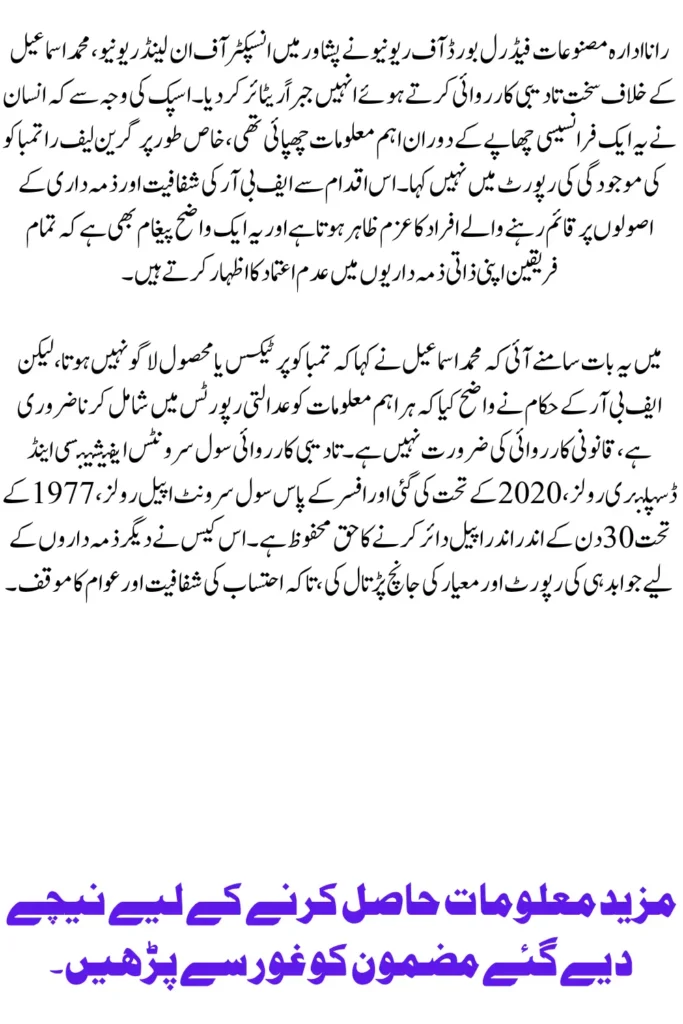
This enforcement aligns with the Civil Servants Efficiency and Disciplinary Rules, 2020, emphasizing the importance of accurate reporting. The inquiry, conducted by Uzma Munir, determined that the omission was a serious violation of official duties, warranting a major penalty to maintain organizational integrity.
Officer Failed Reporting Duties During Critical Revenue Investigation
During a personal hearing held on March 16, 2026, Muhammad Ismail argued that raw tobacco was not subject to taxation or excise and fell outside his authorized responsibilities. Despite this explanation, authorities emphasized that all significant findings must be included in official reports, irrespective of whether immediate action is required.
- The officer did not mention the presence of raw tobacco in the contravention report.
- FBR officials considered the omission a major lapse in professional duties.
- Inquiry concluded the charges against the officer were fully proven.
The investigation highlighted that withholding information of this nature undermines the integrity of revenue operations and could compromise future enforcement actions.
FBR Forces Compulsory Retirement After Inspector Conceals Critical Tobacco Information
The Federal Board of Revenue (FBR) has recently imposed a strict disciplinary action on an Inspector of Inland Revenue, Muhammad Ismail, following his failure to report vital information during an official raid. This decision highlights the board’s commitment to transparency and accountability within its ranks. The officer, part of the Directorate of Intelligence and Investigation in Peshawar, was found guilty of concealing the presence of green leaf raw tobacco during a beverage company inspection.
This case sets a precedent for strict enforcement of reporting standards in revenue operations. It emphasizes that no matter the perceived importance or taxability of an item, civil servants are required to accurately document all findings. Such actions reinforce the credibility of the FBR in maintaining financial discipline across industries.
Officer Failed Reporting Duties During Critical Revenue Investigation
During a personal hearing held on March 16, 2026, Muhammad Ismail argued that raw tobacco was not subject to taxation or excise and fell outside his authorized responsibilities. Despite this explanation, authorities emphasized that all significant findings must be included in official reports, irrespective of whether immediate action is required.
Failing to report such findings can compromise investigations, create loopholes, and damage the government’s ability to regulate industries effectively. This incident serves as a cautionary tale, reminding officers that procedural diligence is as important as enforcement actions themselves.
- The officer did not mention the presence of raw tobacco in the contravention report.
- FBR officials considered the omission a major lapse in professional duties.
- Inquiry concluded the charges against the officer were fully proven.
FBR Chairman Approves Compulsory Retirement Penalty
After reviewing all inquiry findings, verbal statements, and the officer’s written responses, the FBR chairman, acting as the competent authority, approved the penalty of compulsory retirement. This decision reflects the board’s strict stance on ensuring civil servants comply with reporting standards and maintain professional accountability.
The decision also aims to deter negligence within the department, encouraging staff to uphold ethical standards and transparency. It demonstrates that even senior officials are not exempt from scrutiny, ensuring fairness and consistency in disciplinary proceedings.
The officer retains the right to appeal the decision under the Civil Servants Appeal Rules, 1977, within 30 days. This provision ensures due process while reinforcing that serious violations can lead to decisive disciplinary measures.
ECC Approves Rs. 100 Billion Grant to Control
FBR Chairman Approves Compulsory Retirement Penalty
After reviewing all inquiry findings, verbal statements, and the officer’s written responses, the FBR chairman, acting as the competent authority, approved the penalty of compulsory retirement. This decision reflects the board’s strict stance on ensuring civil servants comply with reporting standards and maintain professional accountability.
The officer retains the right to appeal the decision under the Civil Servants Appeal Rules, 1977, within 30 days. This provision ensures due process while reinforcing that serious violations can lead to decisive disciplinary measures.
Key Highlights of Disciplinary Proceedings
| Parameter | Details |
|---|---|
| Officer Name | Muhammad Ismail |
| Position | Inspector of Inland Revenue |
| Location | Peshawar |
| Disciplinary Action | Compulsory Retirement |
| Rule Invoked | Civil Servants Efficiency and Disciplinary Rules, 2020 |
| Right of Appeal | Civil Servants Appeal Rules, 1977 (30 days) |
This table summarizes the main points of the inquiry and final decision, providing clarity for stakeholders and the public on the enforcement process.
Implications for Civil Servants and FBR Operations
The case underlines the critical importance of accurate reporting in all government inspections. Civil servants are expected to document every significant finding, ensuring transparency in regulatory enforcement. Failing to do so can result in severe consequences, including compulsory retirement, regardless of whether the material is taxable.
- Highlights need for strict adherence to reporting standards.
- Reinforces FBR’s zero-tolerance approach to negligence.
- Encourages officials to act responsibly and maintain integrity.
The decision also signals to other government officials that accountability measures are rigorously enforced, safeguarding public trust in regulatory institutions.
Government Petrol Subsidy 2026 New App Based
FAQs
What was Muhammad Ismail’s disciplinary violation?
He concealed the presence of green leaf raw tobacco during an official raid.
What penalty did FBR impose on the officer?
The FBR approved compulsory retirement under disciplinary rules.
Can the officer appeal the decision?
Yes, he can file an appeal within 30 days under the Civil Servants Appeal Rules, 1977.
Which rules guided the FBR’s decision?
The Civil Servants Efficiency and Disciplinary Rules, 2020, were applied in this case.