
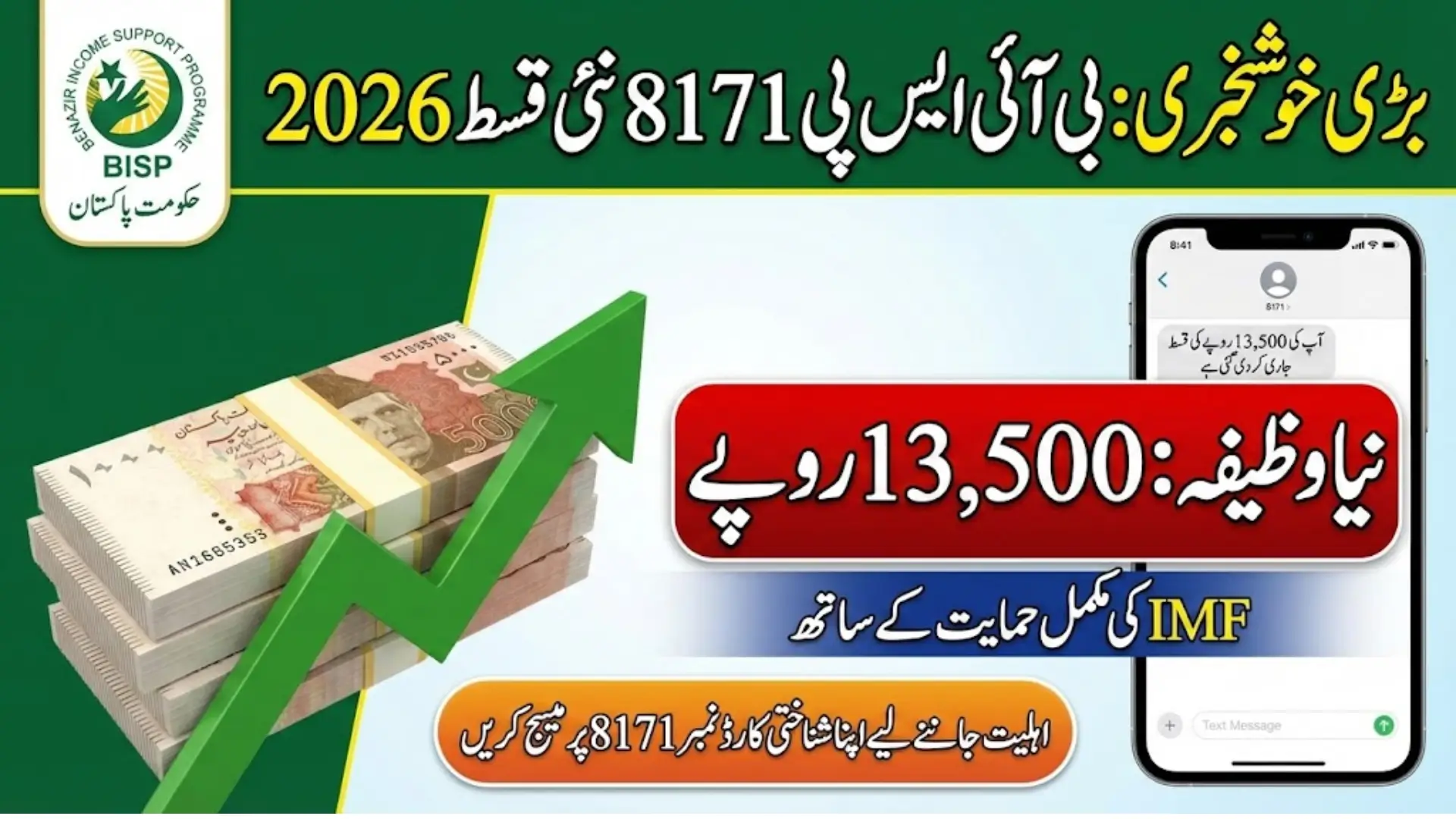
BISP 8171 Payment Raised for 2026
The Government of Pakistan has announced an increase in BISP 8171 payments for 2026, marking a significant step in supporting low-income families. This program, officially known as the Benazir Income Support Programme, provides unconditional cash assistance to households living below the poverty line. The increased payments aim to help families cope with inflation and rising living costs. The International Monetary Fund (IMF) has also expressed support for Pakistan’s expanded social protection budget, acknowledging the importance of protecting vulnerable communities while maintaining fiscal stability.
Also Read:CM Punjab Launches E-Taxi Scheme 2026 – Electric
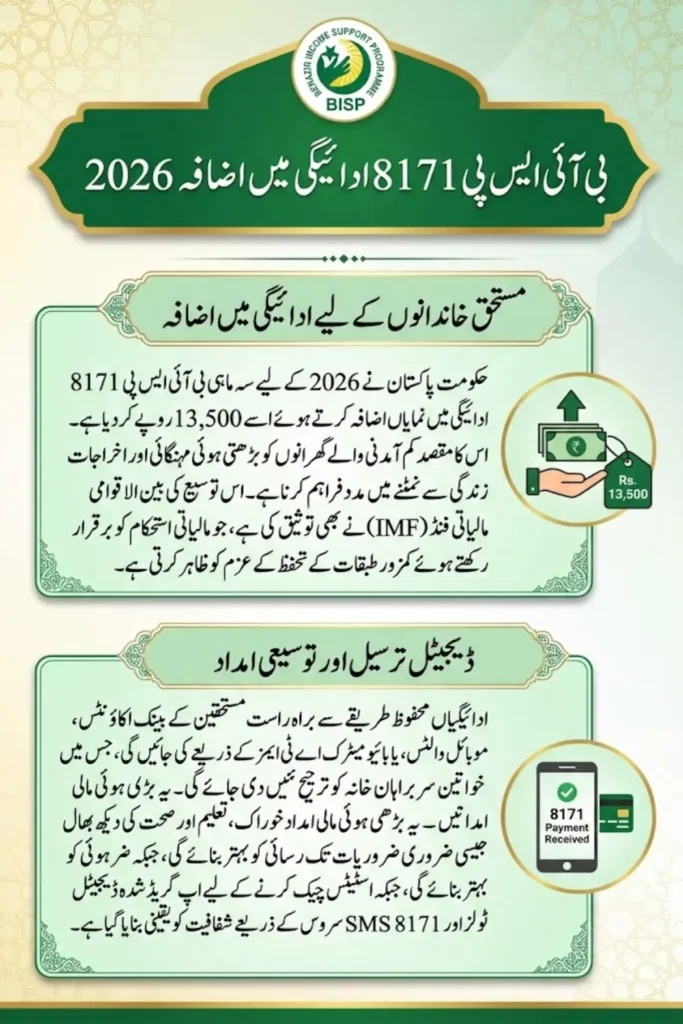
BISP 8171 has become one of the most important social welfare programs in the country, covering millions of households across Pakistan. The program specifically targets women household heads, ensuring that financial support reaches those who manage daily household expenses. With the new payment increase, beneficiaries are expected to receive more substantial assistance, improving access to food, education, and healthcare. The government has also enhanced digital tools for checking payment status, making it easier for families to verify their eligibility and payment schedule.
Understanding BISP 8171 Payment 2026
BISP 8171 Payment 2026 is designed to support low-income families through quarterly cash transfers. Eligible households are identified based on poverty criteria assessed through surveys and verification systems. Each family receives payments directly through bank accounts, mobile wallets, or biometric ATMs, minimizing delays and ensuring secure delivery.
- Targeted mainly at women household heads
- Covers both urban and rural areas
- Uses CNIC-based verification for accuracy
- Payments can be tracked through SMS or the 8171 online portal
The program also includes periodic surveys to update household information. This ensures that funds reach those most in need and prevents misuse. Beneficiaries can send their CNIC to 8171 via SMS or log in to the official portal to check payment status and upcoming installment dates. Digital transparency has reduced corruption and enhanced program efficiency, making BISP a model for social welfare delivery in Pakistan.
Payment Increase for 2026 and Its Impact
The government has raised the quarterly payment amount to Rs. 13,500 in 2026. This increase is designed to counter rising inflation and provide meaningful support to households struggling with daily expenses. Families can use this amount to cover essential needs such as groceries, school fees, and utility bills.
- Provides additional funds to improve household consumption
- Reduces financial stress for vulnerable families
- Delivered securely through banks, mobile wallets, and biometric ATMs
- Improves quality of life and economic stability for recipients
The payment increase also has broader economic implications. With more money in the hands of low-income families, local markets benefit from increased consumption. The program strengthens social stability and reduces poverty levels. Table 1 below shows the previous and updated payment amounts for BISP 8171 beneficiaries.
| Year | Quarterly Payment (Rs.) | Notes |
|---|---|---|
| 2025 | 11,000 | Standard payment before increase |
| 2026 | 13,500 | Increased to support inflation and living costs |
This increase ensures that the program remains effective in mitigating economic challenges for the most vulnerable segments of society. Families can now plan for basic expenses without relying on additional informal support.
Also Read:BISP 8171 CNIC Verification 2026: Eligibility Check
IMF Endorsement and Budget Expansion
The IMF has welcomed Pakistan’s decision to expand the social protection budget, highlighting the importance of safeguarding vulnerable communities while maintaining fiscal discipline. The increased allocation demonstrates the government’s commitment to social welfare even amid broader economic reforms.
- BISP budget raised to approximately Rs. 716 billion for FY 2025-26
- Supports expanded payment amounts and program coverage
- Balances social protection with macroeconomic stability
- International support ensures confidence in Pakistan’s fiscal management
The IMF’s approval reflects the alignment between Pakistan’s social policies and international best practices. Expanding social spending while pursuing fiscal reforms provides a sustainable approach to addressing poverty and economic inequality. Table 2 below summarizes the budget allocation trends for BISP in recent years.
| Fiscal Year | Budget Allocation (Rs. Billion) | Remarks |
|---|---|---|
| 2024-25 | 595 | Previous year allocation |
| 2025-26 | 716 | Increased to support payment rise |
This budget increase ensures that BISP can accommodate new beneficiaries and maintain support for existing families. The IMF’s acknowledgment emphasizes the importance of balancing growth, social protection, and fiscal responsibility.
Digital Tools and Transparency for BISP 8171 Payment 2026
The 8171 web portal and SMS services have been upgraded to improve accessibility for beneficiaries. Families can check payment status instantly, confirm disbursement dates, and ensure their information is accurate. These tools reduce dependency on intermediaries and enhance transparency.
- Online portal requires CNIC and captcha verification
- SMS service allows instant payment checks via mobile phones
- Ensures accurate and timely delivery of funds
- Prevents fraud and unauthorized claims
Digital tools have also enabled the government to monitor program effectiveness more efficiently. Data collected from portals and SMS services help update household information, ensuring that payments are received by eligible families. Improved transparency and accountability have strengthened public trust in BISP and its role in poverty alleviation.
Economic Context and Social Protection Policy
Pakistan’s economy faces challenges such as inflation, debt obligations, and the need for sustainable fiscal policies. Social safety nets like BISP 8171 are crucial in mitigating the impact of these economic pressures on vulnerable households. By maintaining and expanding social spending, the government ensures that low-income families continue to receive necessary support.
- Helps reduce poverty and inequality
- Provides economic stability for families during inflationary periods
- Complements broader economic reforms and fiscal consolidation
- Strengthens social cohesion and community resilience
The government’s partnership with international institutions like the IMF and World Bank ensures that social spending is integrated with economic reforms. Targeted cash transfers like BISP 8171 Payment 2026 play a key role in safeguarding human development and promoting equitable growth.
Also Read:BISP 8171 Payment via Easypaisa & JazzCash 2026 –
FAQs
What is BISP 8171 Payment 2026?
BISP 8171 Payment 2026 is a quarterly cash transfer program in Pakistan that supports low-income families, especially women household heads.
How can I check my BISP 8171 payment status?
Beneficiaries can send their CNIC via SMS to 8171 or use the official 8171 web portal to verify payment status.
Who is eligible for BISP 8171 payments?
Eligible families are identified based on poverty surveys, focusing on low-income households and women household heads.
How has the payment increased in 2026?
The quarterly payment was raised to Rs. 13,500 to help families cope with inflation and rising living costs.
Does the IMF support this payment increase?
Yes, the IMF has acknowledged Pakistan’s budget expansion for social protection and supports the increased BISP 8171 payments.