
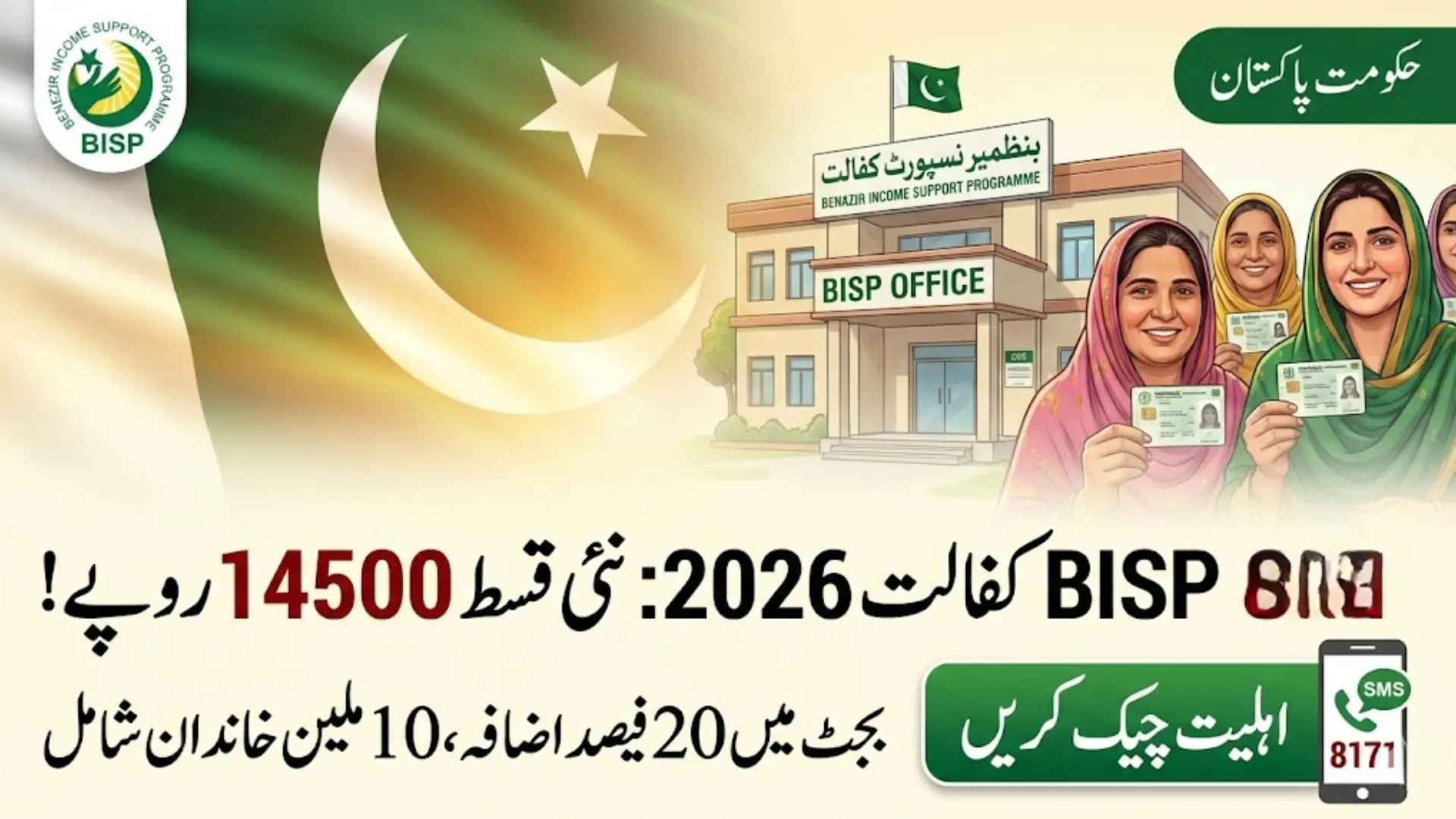
BISP 8171 Kafalat 2026
The Government of Pakistan has announced a significant 20% increase in the Benazir Income Support Programme (BISP) budget for 2026, raising it to Rs 716 billion from Rs 592.48 billion in the previous year. This step aims to support low-income families struggling with rising inflation and ensure that social safety nets remain effective. Beneficiaries of the Benazir Kafalat Program will now receive quarterly payments of Rs 14,500, up from Rs 13,500, beginning January 2026.
Gold Rate in Pakistan 2026 24K 22K 1 Gram Price & Investment Guide
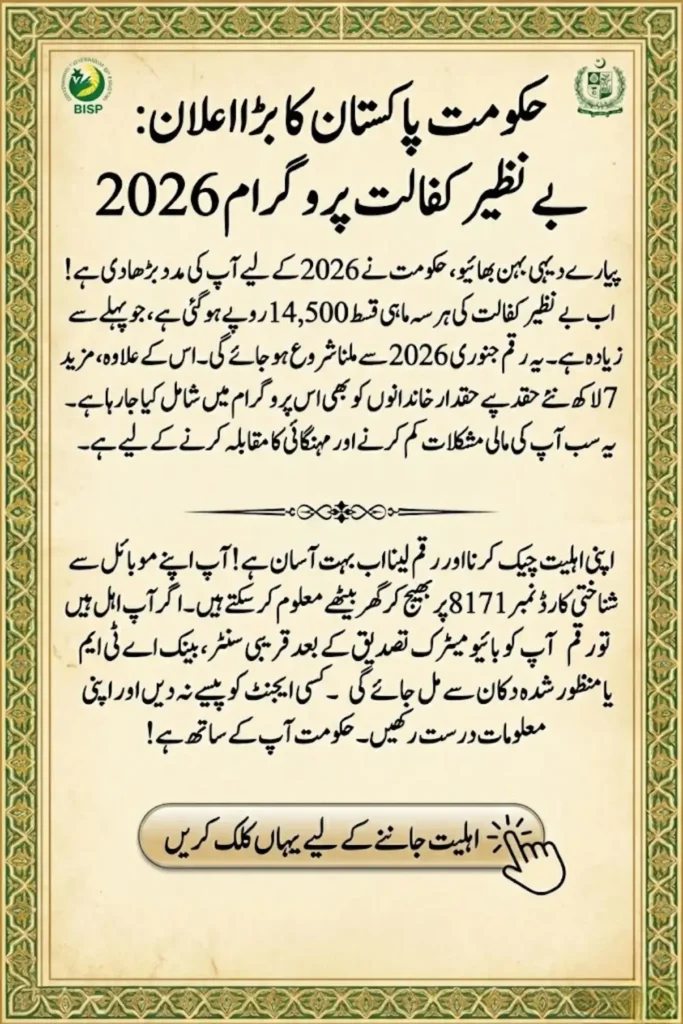
This increase comes at a critical time as many households face difficulty meeting daily needs, including food, healthcare, and education. For nearly 10 million women-led families enrolled in the program, the additional Rs 1,000 per quarter can make a tangible difference, helping families afford basic necessities and maintain dignity in daily life.
Understanding the BISP 8171 Budget Increase 2026
The 2026 budget increase reflects Pakistan’s commitment to strengthening its social safety net and providing meaningful inflation relief. By raising the quarterly Kafalat payment from Rs 13,500 to Rs 14,500, the government ensures that the program keeps pace with rising costs of living. This adjustment also allows for the addition of 700,000 new families to the beneficiary pool, increasing total coverage to 10 million households.
Key objectives of this budget expansion include:
- Enhanced Services: Improving digital payment systems and reducing fraud
- Inflation Relief: Maintaining purchasing power for low-income families
- Wider Coverage: Including previously excluded deserving families
| Budget Category | FY 2024-25 | FY 2025-26 | Increase |
|---|---|---|---|
| Total BISP Allocation | Rs 592 billion | Rs 716 billion | 20.9% |
| Quarterly Kafalat Payment | Rs 13,500 | Rs 14,500 | 7.4% |
| Target Beneficiaries | 9.3 million | 10 million | +700,000 |
Economic Importance of the Increase
Inflation in Pakistan has significantly affected the purchasing power of low-income households. Rising prices of food, utilities, and healthcare have made it harder for families to cover basic expenses. The additional Rs 1,000 per quarter enables families to purchase essential groceries, cover partial utility bills, pay for school supplies, and meet basic healthcare needs.
The increase also aligns with international commitments, including IMF recommendations, to adjust cash transfers according to inflation. This ensures that the real value of BISP payments remains stable, providing a sustainable social protection framework that responds to economic realities.
Who Benefits from BISP 8171 Kafalat 2026
Current beneficiaries will automatically receive the new payment of Rs 14,500 starting January 2026, provided their registration details are up to date. The program prioritizes:
- Women-headed households
- Low-income families with PMT scores below the threshold
- Widows, divorced women, and families with disabled members
- Households with school-age children eligible for Taleemi Wazaif
Additionally, 700,000 new families are being added to the program, ensuring that more deserving households benefit from government support.
BISP 13500 Payment Check Online 2026 via 8171 Portal & SMS Complete Eligibility and Collection
Eligibility Criteria for BISP 8171 Kafalat
To qualify for BISP assistance, households must meet specific requirements:
- Poverty Score (PMT): Score below 32 for general applicants, below 37 for widows and disabled persons
- Valid CNIC: Female head of household must have a non-expired CNIC registered with NADRA
- No Government Employment: Neither applicant nor spouse should hold a government job
- Asset Restrictions: Applicants should not own luxury vehicles, commercial property, or large bank balances
Priority is given to families affected by disasters, households with multiple school-going children, pregnant and lactating mothers, and elderly citizens without other income sources.
How to Check Your BISP Payment Status
The government has modernized the verification system, allowing beneficiaries to check their eligibility and payment status through multiple channels:
SMS Service (8171):
- Send your 13-digit CNIC to 8171
- Receive automated reply with eligibility and payment status
- Important: Use a SIM registered in your name
Online Web Portal:
- Visit 8171.bisp.gov.pk
- Enter CNIC and CAPTCHA
- Check payment status, release dates, and pending documentation
BISP Helpline (0800-26477):
- Call the toll-free number for personalized assistance
Visit BISP Tehsil Office:
- For complex issues or biometric verification updates
Payment Collection Methods
BISP offers multiple convenient ways to receive Rs 14,500:
- BISP Campsites: Temporary centers with on-site staff and biometric verification
- ATM Withdrawal (HBL & Bank Alfalah): Biometric thumbprint-based cash withdrawal
- Digital Wallets: JazzCash and Easypaisa transfers for instant payments
- Authorized Retail Agents: Available in rural areas with proper monitoring
Registration Process for New Applicants
New families must participate in the NSER Dynamic Survey and submit required documents, including CNICs, B-Forms, utility bills, and proof of residence. Following survey completion, the PMT score is calculated to determine eligibility. Biometric verification is required before payments are activated.
Enhanced Features and Improvements in 2026
The 2026 BISP enhancements include:
- Digital Transformation: Bank accounts and digital wallets for beneficiaries
- Transparency Measures: QR code slips, numbered tokens, separate women’s counters, facial verification
- Education and Health Linkages: Increased Taleemi Wazaif for children and maternal nutrition support
These initiatives aim to improve efficiency, reduce fraud, and ensure dignity for beneficiaries.
BISP 8171 Payment Check by CNIC Online 2026 Complete Guide to Verify Installment, Eligibility &
Common Issues and Solutions
| Issue | Solution |
|---|---|
| Survey Required | Update NSER survey at BISP Tehsil Office |
| Biometric Verification Failed | Update fingerprints at NADRA office |
| Payment Deductions by Agents | Use official channels, report to helpline |
| CNIC Shows “Ineligible” | Request re-survey or appeal with documentation |
Important Dates and Payment Schedule 2026
| Quarter | Period | Expected Payment Release | Amount |
|---|---|---|---|
| Q1 | Jan-Mar | Jan 15-31 | Rs 14,500 |
| Q2 | Apr-Jun | Apr 15-30 | Rs 14,500 |
| Q3 | Jul-Sep | Jul 15-31 | Rs 14,500 |
| Q4 | Oct-Dec | Oct 15-31 | Rs 14,500 |
Impact on Families and Economy
The Rs 1,000 increase per quarter may seem modest, but for low-income families it represents:
- 7.4% more purchasing power
- Extra 10-15 kg of wheat flour per quarter
- Coverage for school supplies for one child
- Partial payment for healthcare needs
Economically, increased payments stimulate local markets, benefiting small shops, agricultural sectors, and schools.
FAQs
When will I receive the increased payment of Rs 14,500?
The new payment starts with the January 2026 quarter for verified beneficiaries.
Do I need to reapply to get the Rs 14,500 payment?
No, existing beneficiaries automatically receive it, provided their NSER data is current.
Can men receive BISP payments?
No, payments are exclusively for female heads of households.
What happens if my CNIC is expired?
An expired CNIC blocks payments; renew it at NADRA and update BISP records.
How can I check if I’m eligible for the first time?
Send your CNIC to 8171 or visit the BISP portal; if survey is required, visit your nearest Tehsil office.
Is biometric verification still required in 2026?
Yes, all payment collections require fingerprint verification for security.
8171 Web Portal 2026 Complete Guide to 8171 Check
Conclusion
The 20% BISP budget increase in 2026 is more than a financial adjustment; it reflects Pakistan’s commitment to protecting vulnerable families. With quarterly payments of Rs 14,500, expanded coverage, digital payment options, and transparent verification systems, the program ensures that millions of women-led households can maintain dignity, access education and healthcare, and cope with rising costs. Beneficiaries are encouraged to keep their information updated and utilize official channels to receive their rightful support.