
Introduction
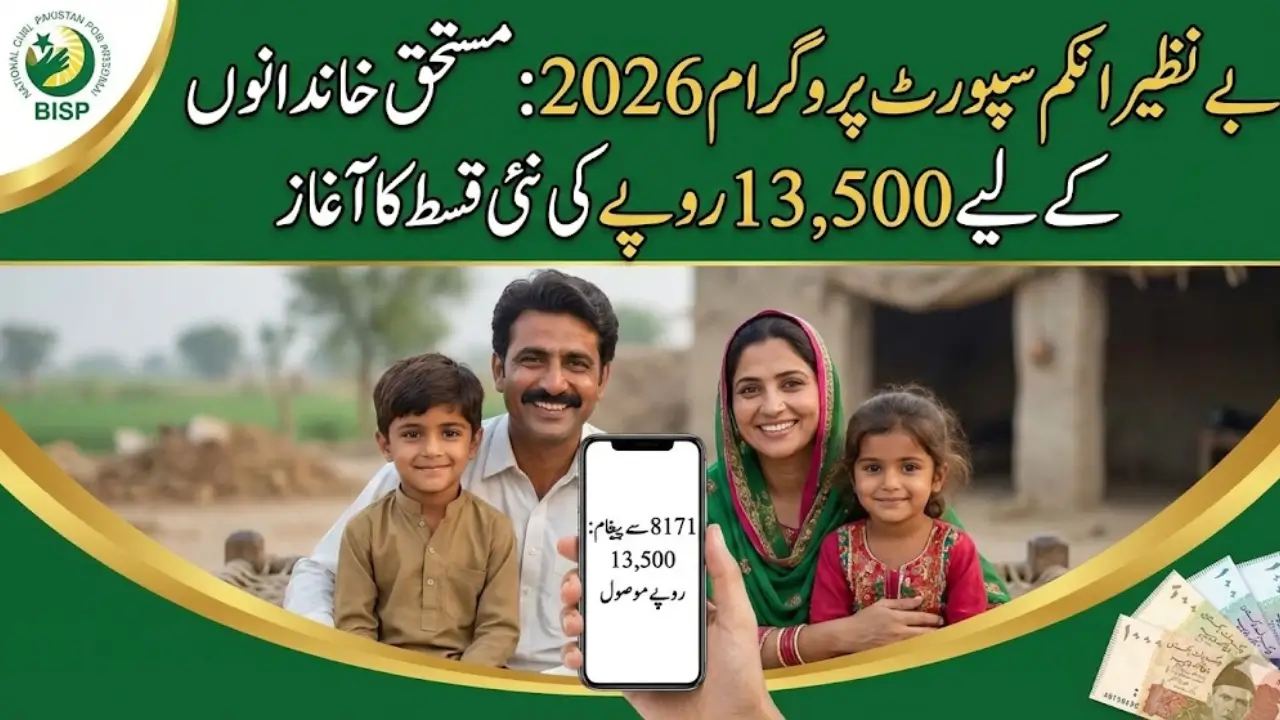
The Benazir Income Support Programme (BISP) has long been a cornerstone of Pakistan’s social welfare system, aiming to support vulnerable segments of society. In 2026, the government has officially rolled out the BISP 8171 payment cycle, offering financial assistance of Rs. 13,500 to eligible families across the country. This installment is part of the latest quarterly distribution under BISP and targets households that are most in need, including low-income families, women-led households, widows, persons with disabilities, and communities affected by natural disasters such as floods.
You Can Also Read:BISP 8171 Payment 2026: Complete Guide to Rs. 13,500 Installment
This program reflects the government’s commitment to social protection and poverty alleviation. With rising inflation and increasing economic challenges, the timely provision of financial assistance has become crucial. BISP 8171 payments are designed not only to meet basic household needs such as food and healthcare but also to provide opportunities for families to invest in education and other long-term development goals.
Understanding BISP 8171 Payment Cycle
The BISP 8171 payment system is a mobile-based platform used to distribute cash assistance to registered beneficiaries. The number 8171 refers to the official SMS and mobile service code, which allows recipients to receive updates on their payment status, confirm eligibility, and get information on disbursement schedules. The introduction of this digital system has significantly increased transparency and reduced delays that were previously common in cash transfer programs.
Under the 8171 payment cycle, beneficiaries receive Rs. 13,500 per quarter. Payments are disbursed directly to bank accounts or through mobile banking services, ensuring that recipients can access funds safely without the need to visit government offices. This method also helps minimize the risk of fraud and provides a reliable record of payments for both beneficiaries and program administrators.
You Can Also Read:PM Laptop Scheme Distribution Date Announced
Eligibility Criteria
Eligibility for BISP 8171 payments is determined through a combination of socio-economic surveys and documentation. The program focuses on families living below the poverty line, women-headed households, and marginalized groups who are most at risk. Additionally, persons with disabilities and widows are given priority to ensure that assistance reaches those with limited earning opportunities. Families affected by natural disasters, particularly floods, are also considered for emergency support under this program.
Beneficiaries must be registered with BISP and provide accurate information regarding household income and demographics. Verification processes are conducted to confirm eligibility and prevent duplication of benefits. This careful vetting ensures that assistance reaches the most deserving households and promotes fair distribution of resources.
How Payments Are Made
BISP 8171 payments are made through multiple channels to ensure accessibility for all recipients. Bank accounts linked to the program receive the quarterly installment directly, while mobile banking and agent-based distribution systems are also available for those without formal banking access. Beneficiaries can use the 8171 SMS service to confirm payment status, receive alerts about upcoming installments, and resolve any discrepancies.
This multi-channel approach is particularly important in rural and remote areas, where access to banks may be limited. By leveraging technology and mobile networks, BISP ensures that assistance reaches households promptly and efficiently. Furthermore, the transparency of digital payments helps reduce corruption and misuse of funds.
Importance of the Program
The BISP 8171 payment cycle plays a vital role in reducing poverty and promoting social welfare in Pakistan. For many low-income families, the quarterly payment of Rs. 13,500 provides essential support for household expenses, including food, healthcare, education, and utility bills. Women-led households, in particular, benefit from direct access to funds, which empowers them to make independent financial decisions and improve their family’s living standards.
In addition to immediate financial relief, the program contributes to long-term social development by helping families break the cycle of poverty. Regular cash assistance enables households to invest in their children’s education, access healthcare services, and manage emergencies without falling into debt. The program’s focus on inclusivity ensures that vulnerable and marginalized communities are not left behind.
You Can Also Read:Punjab Government Scholarship Card Program –
Frequently Asked Questions
1. Who is eligible to receive BISP 8171 payments in 2026?
Eligibility is based on socio-economic surveys conducted by BISP. Priority is given to low-income families, women-led households, widows, persons with disabilities, and communities affected by natural disasters such as floods.
2. How can beneficiaries check their BISP 8171 payment status?
Beneficiaries can check their payment status by sending an SMS to 8171 from their registered mobile number. They can also visit the official BISP website or contact local BISP offices for assistance.
3. When will the 2026 BISP 8171 installment be disbursed?
The payments are released on a quarterly basis, with specific dates announced by BISP prior to disbursement. Beneficiaries are advised to monitor official announcements and SMS notifications for accurate information.
4. Can individuals without a bank account receive BISP 8171 payments?
Yes, BISP provides alternative payment methods for those without bank accounts, including mobile banking services and authorized cash distribution points, ensuring accessibility for all eligible recipients.
5. What should beneficiaries do if their payment is delayed or missing?
If a payment is delayed or missing, beneficiaries should immediately contact BISP via the 8171 SMS service, visit a local BISP office, or use official helplines. Proper verification of registration and account details is often required to resolve issues.
Conclusion
The BISP 8171 payment cycle 2026 represents a critical effort by the Government of Pakistan to support low-income families, women-led households, persons with disabilities, widows, and disaster-affected communities. By providing Rs. 13,500 in quarterly installments, the program not only addresses immediate financial needs but also promotes long-term social and economic development. The use of digital and mobile-based payment channels ensures transparency, accessibility, and efficiency, while ongoing improvements aim to overcome challenges in reaching remote or underserved areas. Overall, BISP 8171 plays an essential role in poverty alleviation, social empowerment, and the creation of a more equitable society in Pakistan.
The BISP 8171 payment cycle 2026 is a vital initiative by the Government of Pakistan that provides essential financial support of Rs. 13,500 to low-income families, women-led households, widows, persons with disabilities, and disaster-affected communities. Beyond immediate relief, the program empowers vulnerable groups, promotes education, healthcare, and overall social welfare, and strengthens financial independence, especially for women. By leveraging digital and mobile-based payment systems, BISP ensures transparency, efficiency, and accessibility, while ongoing improvements aim to reach even the most remote and underserved areas. Overall, the program plays a crucial role in poverty alleviation, social empowerment, and fostering a more equitable society in Pakistan.