
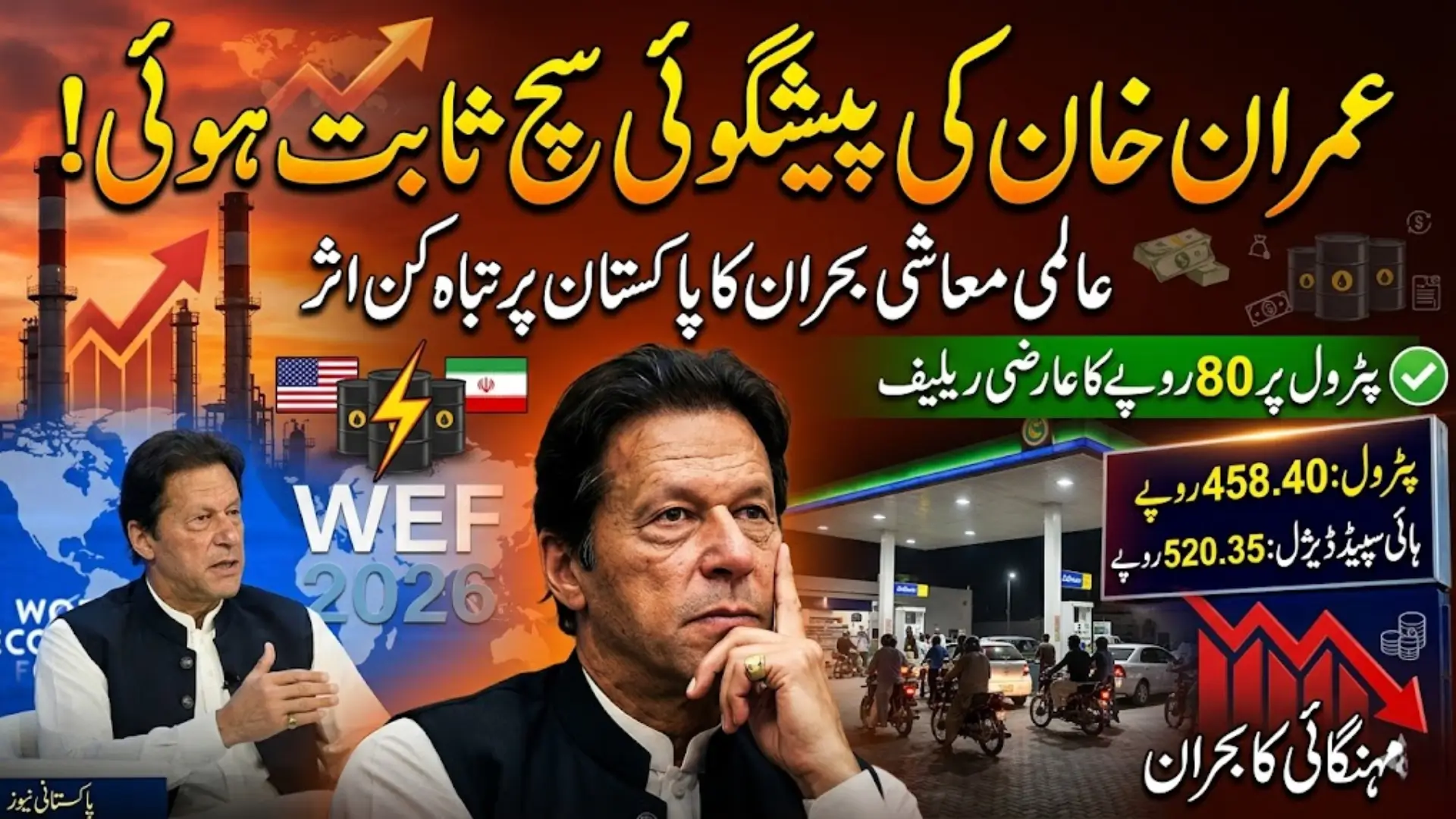
Imran Khan’s Early Warning
Former Prime Minister Imran Khan had warned years ago that any conflict between the United States and Iran could have devastating global consequences. While speaking at the World Economic Forum, he highlighted how such a war would not remain limited to the battlefield but would instead impact global energy markets and economies.
Pakistan Customs Updates Valuation of Empty Tin

At the time, his remarks were seen as cautionary, but recent developments suggest that his concerns were well-founded. He specifically pointed out that developing countries like Pakistan would face severe economic pressure due to their reliance on imported oil and fragile financial systems.
- Warned about US-Iran conflict consequences
- Highlighted risks for developing economies
- Spoke during World Economic Forum session
- Emphasized energy dependency issues
Rising Diesel Prices in the United States A Growing
Economic Risks Highlighted in the Prediction
Imran Khan explained that rising oil prices during a conflict would immediately affect national budgets and external accounts. He warned that countries already struggling with economic instability would find it even harder to manage sudden increases in fuel costs.
He also stressed that such a crisis would not only affect governments but also ordinary people. Higher energy costs would lead to increased inflation, making daily life more expensive and pushing more people into poverty across multiple regions.
- Rising oil prices would impact national budgets
- Current account deficits likely to worsen
- Inflation expected to increase globally
- Poverty levels could rise significantly
Current Situation Reflects Past Warnings
Years after those statements, the global situation appears to mirror what was predicted. The ongoing tensions involving the United States and Iran have triggered a sharp increase in global oil prices, creating economic challenges for many countries.
In Pakistan, the impact has been particularly severe. Fuel prices have surged dramatically, with petrol and diesel rates reaching record highs. This reflects how global conflicts can directly influence domestic economies, especially in countries heavily dependent on imported energy.
PESR Online Registration 2026 Step by Step Guide
| Fuel Type | Latest Price in Pakistan | Impact Level |
|---|---|---|
| Petrol | Rs. 458.40 per litre | Very High |
| High-Speed Diesel | Rs. 520.35 per litre | Critical |
- Fuel prices have reached historic highs
- Pakistan heavily affected due to oil imports
- Global oil market instability continues
- Economic pressure increasing nationwide
Government Response and Relief Measures
Prime Minister Shehbaz Sharif announced temporary relief measures to ease the burden on citizens. The government reduced the petroleum levy, offering a Rs. 80 per litre price cut on petrol to provide immediate relief.
While this step has helped reduce short-term pressure, experts believe it may not be a long-term solution. The underlying issue of global oil price volatility remains unresolved, meaning further adjustments may be needed depending on international developments.
- Rs. 80 per litre relief on petrol announced
- Petroleum levy temporarily reduced
- Short-term relief for consumers
- Long-term challenges still exist
Ehsaas BISP 8171 Payment Schedule April 2026
Impact on Daily Life and Inflation
The increase in fuel prices has quickly spread across various sectors of the economy. Transportation costs have risen significantly, with fares increasing by up to 30 percent in some areas. This has made commuting and goods transportation more expensive.
As a result, food prices and essential commodities are also becoming more costly. Households are facing growing financial strain, especially those already struggling with high inflation and limited income growth.
- Transport fares increased by up to 30 percent
- Rising cost of goods and services
- Increased financial pressure on households
- Inflation affecting daily life
Broader Economic Implications
Pakistan’s heavy dependence on imported oil makes it highly vulnerable to global energy shocks. When international prices rise, the country’s economy feels the impact almost immediately, affecting everything from trade balances to inflation rates.
This situation highlights the need for long-term strategies such as energy diversification and reduced reliance on imports. Without structural reforms, similar crises could continue to affect the economy in the future.
| Economic Factor | Effect of Rising Fuel Prices |
|---|---|
| Trade Balance | Increased deficit |
| Inflation | Significant rise |
| Transport Sector | Higher operational costs |
| Household Expenses | Increased financial burden |
- Heavy reliance on imported oil
- Increased trade and budget deficits
- Need for energy diversification
- Long-term economic reforms required
Punjab Government Plans to Upgrade High Schools
A Prediction That Became Reality
Imran Khan’s earlier warning now appears highly relevant as the situation unfolds. What was once considered a future risk has become a present-day challenge affecting millions of people.
The current crisis demonstrates how geopolitical conflicts can have far-reaching consequences beyond borders. It also reinforces the importance of proactive planning and global cooperation to prevent such economic shocks.
- Prediction aligned with current events
- Global conflicts affecting local economies
- Millions impacted by rising costs
- Importance of future preparedness
Fix 1000 Helpline Issue 2026 Complete Guide for Maryam Ko Batayein Program Participants
FAQs
What did Imran Khan predict about the US-Iran conflict?
He warned that such a conflict would cause a global economic crisis, especially for developing countries dependent on imported energy.
Why is Pakistan heavily affected by rising oil prices?
Pakistan relies on imported oil, making it vulnerable to global price increases and supply disruptions.
What relief measures has the government announced?
The government reduced the petroleum levy, offering a temporary Rs. 80 per litre reduction in petrol prices.
How are rising fuel prices affecting daily life?
They are increasing transport costs, food prices, and overall inflation, putting pressure on household budgets.